

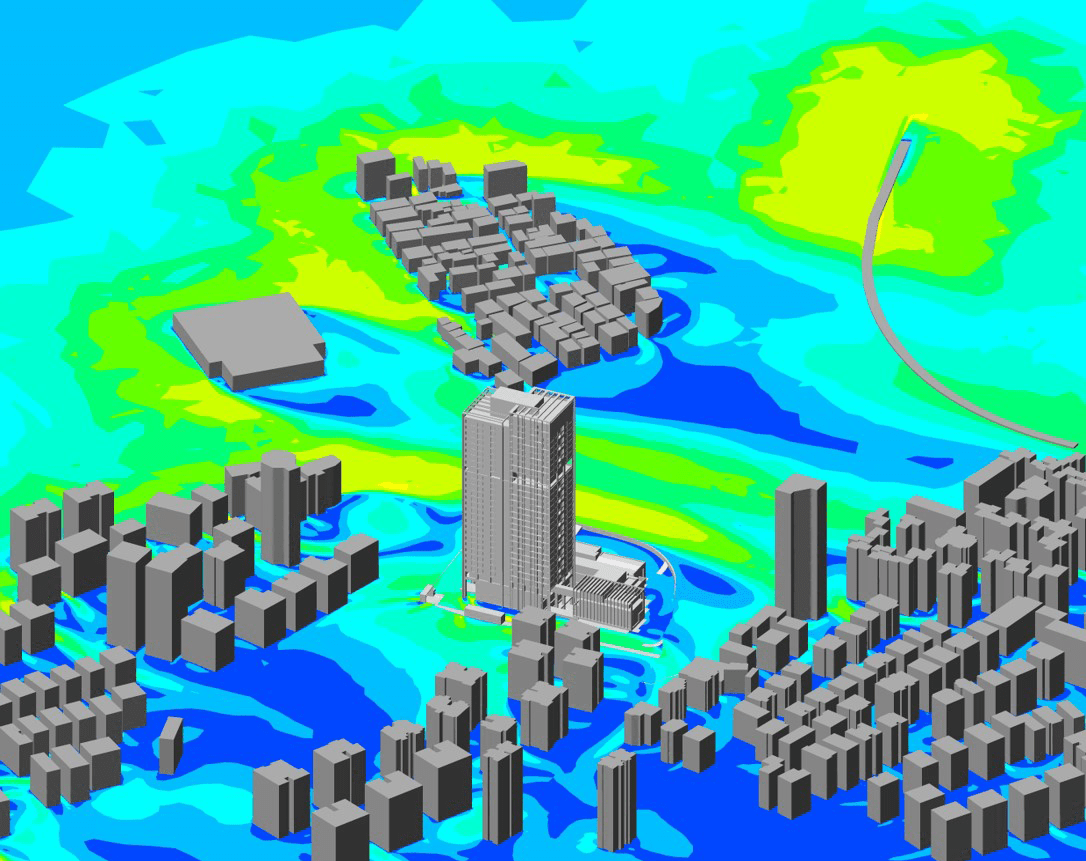
Turning this into a step-by-step worked example: (1) the target activity class is defined: here, long-term sitting (an outdoor dining area); (2) the comfort threshold for that class is set: 2.2 m/s in this example; (3) using the area’s long-term wind statistics together with the CFD results modelled with the surrounding buildings, the percentage of time the wind speed exceeds this threshold (the exceedance frequency) is calculated; (4) if the exceedance frequency comes out high, mitigation options such as the position and height of a wind breaker are tested in the same model. The result is a numerical answer to “how often will your napkins fly off this table.”
In order for the design to meet this detail, the first point of our team is the analysis of the historical climate data of the region. Thus, both the determination of prevailing wind directions and the level of speed in the building region will be defined. Then, it is calculated how the project building, modeled together with the surrounding buildings, direct the wind.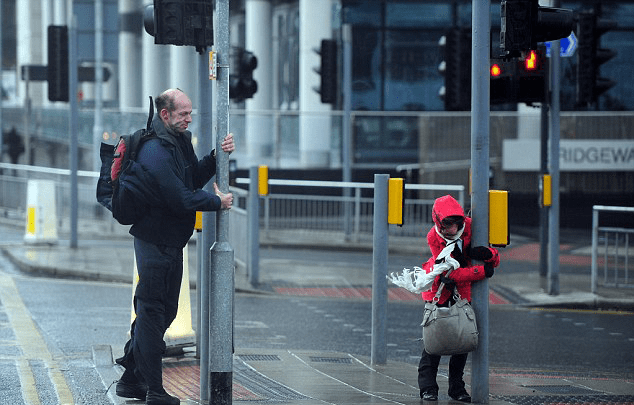 What we have described above, should be needed for larger structures such as bridges or stadiums. For example, if the sound of the spectators who come to watch the match is not echoed in the stadium cause of prevailing winds, the morale will deteriorate. If we add to this situation the football team, which lost its advantage against the opponent due to the prevailing wind, the tension will increase. Of course, this may be acceptable for some due to the habits or cultural background of the spectators, but if the score of the match changes due to this, even the reconstruction of the stadium may be possible.
In some bridges, the increase in the blowing speed of the side winds is so high that it poses a serious risk to small vehicles. Adjusting the height, position and permeability of the wind breakers to be made to the sides of the bridge can be tested digitally quickly. Alkazar team will calculate and visualize all the comfort you need for the wind at the first stage with you.
What we have described above, should be needed for larger structures such as bridges or stadiums. For example, if the sound of the spectators who come to watch the match is not echoed in the stadium cause of prevailing winds, the morale will deteriorate. If we add to this situation the football team, which lost its advantage against the opponent due to the prevailing wind, the tension will increase. Of course, this may be acceptable for some due to the habits or cultural background of the spectators, but if the score of the match changes due to this, even the reconstruction of the stadium may be possible.
In some bridges, the increase in the blowing speed of the side winds is so high that it poses a serious risk to small vehicles. Adjusting the height, position and permeability of the wind breakers to be made to the sides of the bridge can be tested digitally quickly. Alkazar team will calculate and visualize all the comfort you need for the wind at the first stage with you.
Activity classes
Comfort is assessed against the activity classes of Lawson-type criteria. Numerical speed thresholds are assessed per project against local long-term wind statistics; the table below shows the typical location for each class:
| Activity class | Typical location |
|---|---|
| Long-term sitting | Cafés, terraces, outdoor dining areas |
| Short-term sitting | Temporary seating areas |
| Standing | Building entrances, bus stops, waiting areas |
| Strolling | Walkways, plazas, shopping streets |
| Walking | Main pedestrian routes, transit corridors |
When is this needed?
- High-rise buildings or mixed-use projects made up of several buildings
- Leasing/sales plans for commercial outdoor areas expected to support long-term seated use
- Wind-sensitive amenity spaces such as rooftop restaurants, terraces or mall entrances
- Large-span structures such as stadiums and bridges
Process and deliverables
| Steps | Deliverables |
|---|---|
| Analysis of the area’s historical climate data (prevailing directions and intensity) → CFD simulation modelled together with surrounding buildings → comparison of wind speed at each point against its activity-class threshold → calculation of exceedance frequency from long-term statistics → testing mitigation options (wind breakers, canopies, planting) where needed | Comfort maps by activity class; threshold exceedance frequency results; safety-level check; comparison of mitigation scenarios |
Reference projects
- The Museum Hotel Antakya: Comfort analysis based on wind in pedestrian-level usage areas.
- Downtown Bursa: Pedestrian-level wind comfort assessment for an 83,000 m² shopping, living and entertainment centre.
- Anatolia Ceramic Production Facility: Comfort analysis based on wind in pedestrian-level usage areas.
- Hillside Bodrum Hotel and Holiday Village: Wind consultancy for a seafront-and-hillside resort project.
Get a quote: Share your massing model; let’s scope the pedestrian-level wind comfort study together. Contact us.
Pedestrian wind comfort: what is assessed and how
Short answer: Alkazar assesses wind speeds at pedestrian level with CFD simulation and reports comfort as exceedance of Lawson-type activity thresholds (sitting, standing, strolling, walking), plus a safety check. Mitigation options can be tested before construction. See also wind & CFD consultancy and facade wind loading.
Frequently asked questions
- What is pedestrian level wind comfort?
- It is the assessment of wind speeds at about 1.5–2 m above ground (where people actually walk, sit and queue) around and between buildings. Tall or closely spaced buildings accelerate wind down to street level, which can make entrances, terraces and open spaces unusable even when the building itself is structurally safe.
- Which criteria are used to judge comfort?
- Activity-based categories of the Lawson-type criteria: long-term sitting (cafés, terraces), short-term sitting, standing (entrances, bus stops), strolling and walking. For each location the wind speed is compared against the threshold for its intended activity and the exceedance frequency is calculated from long-term local wind statistics; a separate check covers safety-level gusts.
- At which design stage should it be done?
- As early as possible. At massing stage the geometry can still be changed, which is the cheapest way to fix a wind problem. Later stages are still useful for testing mitigation (canopies, screens, wind breakers, planting and parapet changes) before construction.
- Can mitigation options be tested?
- Yes. Alkazar has tested the position and shape of wind breakers for rooftop restaurants and open areas, and evaluated comfort together with temperature and humidity when the outdoor experience, not just the wind speed, is what matters.
- What input produces the comfort map?
- It is produced by combining the area’s long-term local wind statistics with the CFD velocity field modelled together with the surrounding buildings; each point is compared against the threshold for its intended activity to calculate the exceedance frequency.
Related articles: Wind in passages under buildings: A straight corridor or a route with turns? · Where should courtyard openings be? How pedestrian-level wind changes with design