A pedestrian path passing under a building also gives the wind a way through. So how much does adding turns to the route calm this area? We compared three different passages within the same building. The result shows that a drop in overall speed and the disappearance of local fast regions are two different things.
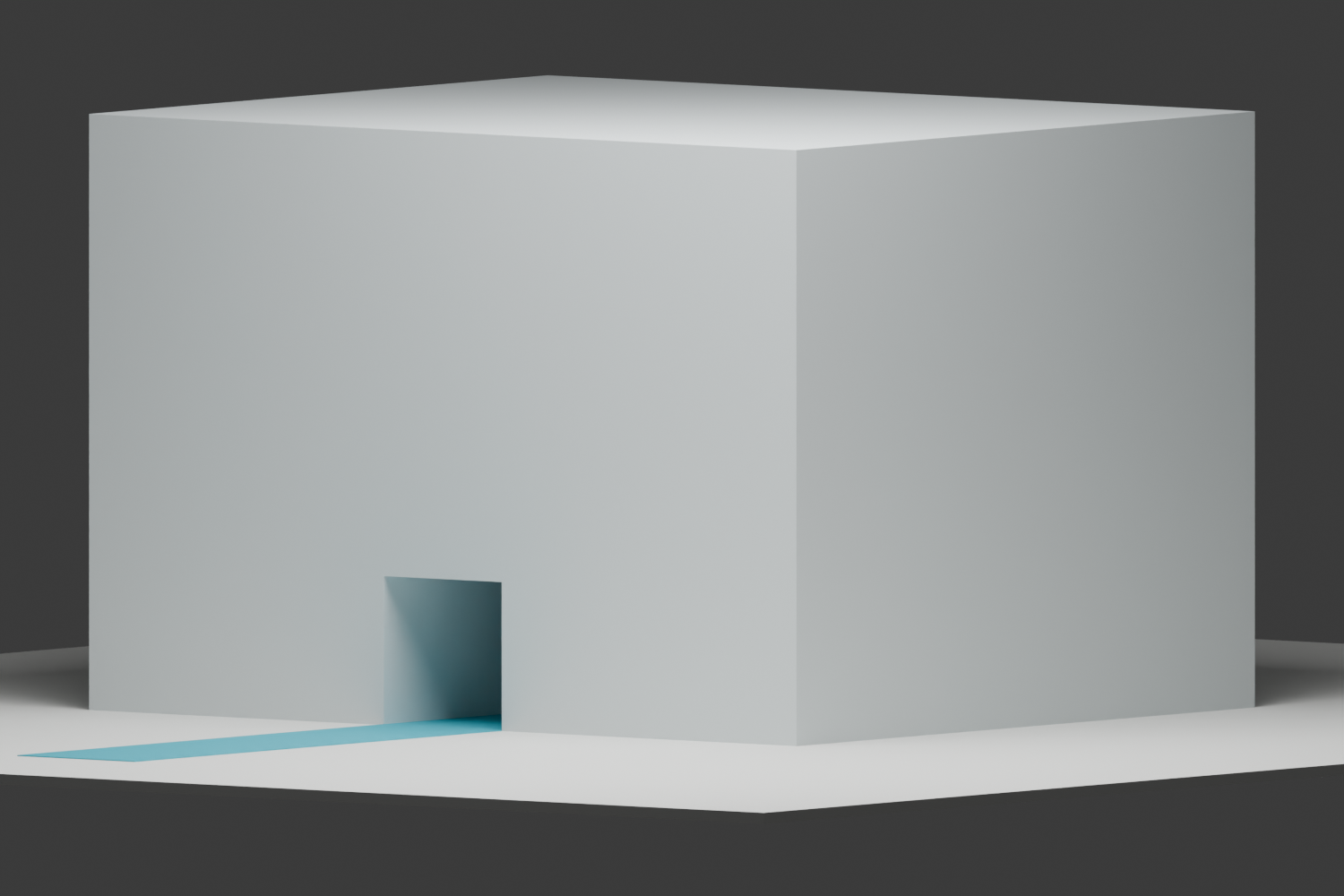
Same passage section, three routes
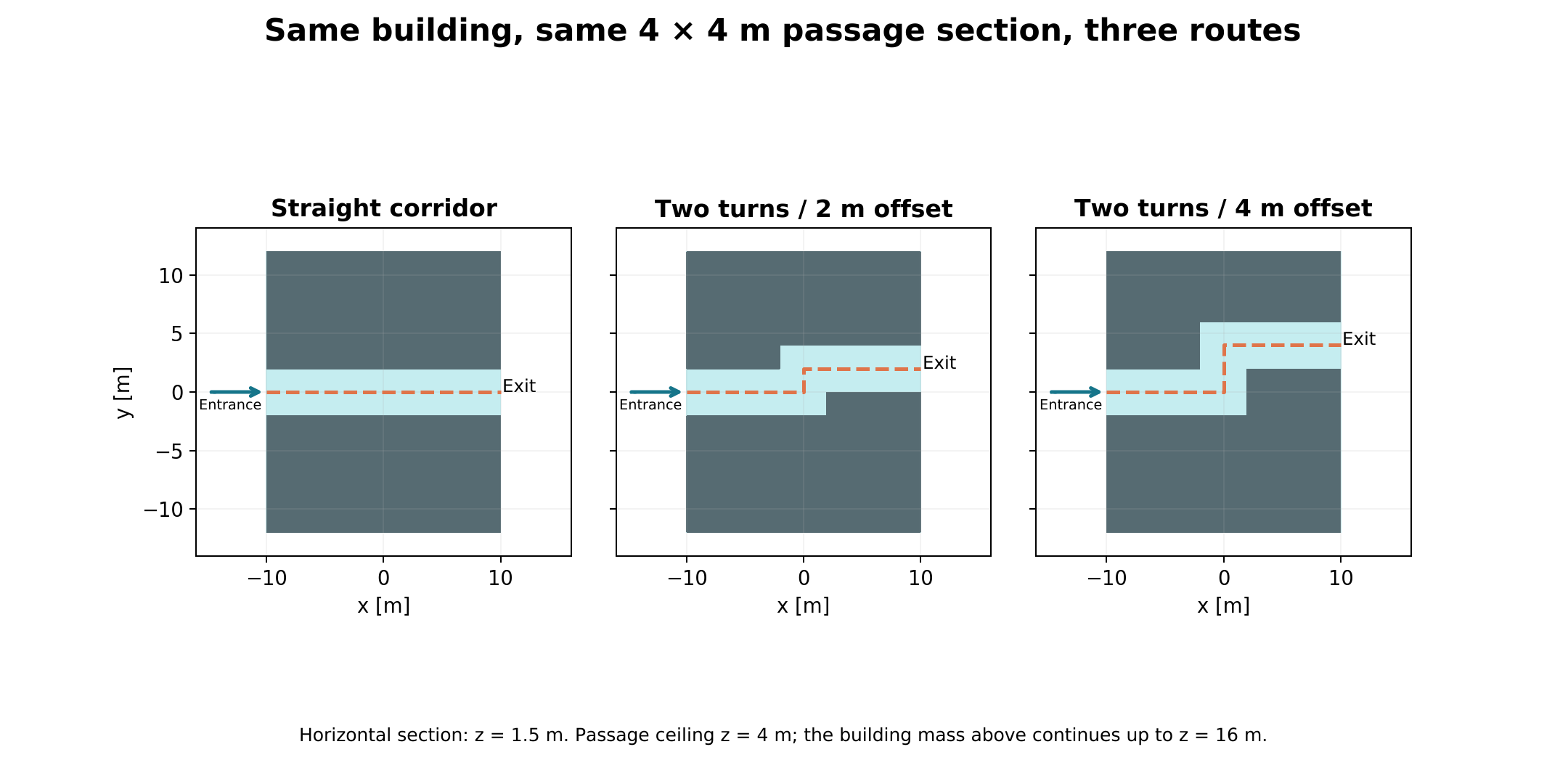
All passages are 4 m wide and 4 m high, covered above by the building mass. In the straight corridor, the entrance and exit are on the same axis. In the other two layouts, the exit is shifted sideways by 2 m and 4 m, respectively; the route passes through two turns.
What does the speed map say?
With the wind arriving perpendicular to the entrance facade, we examined the speed distribution at a height of 1.5 m above the ground. In the maps, warm colors show higher speeds and cool colors lower speeds.
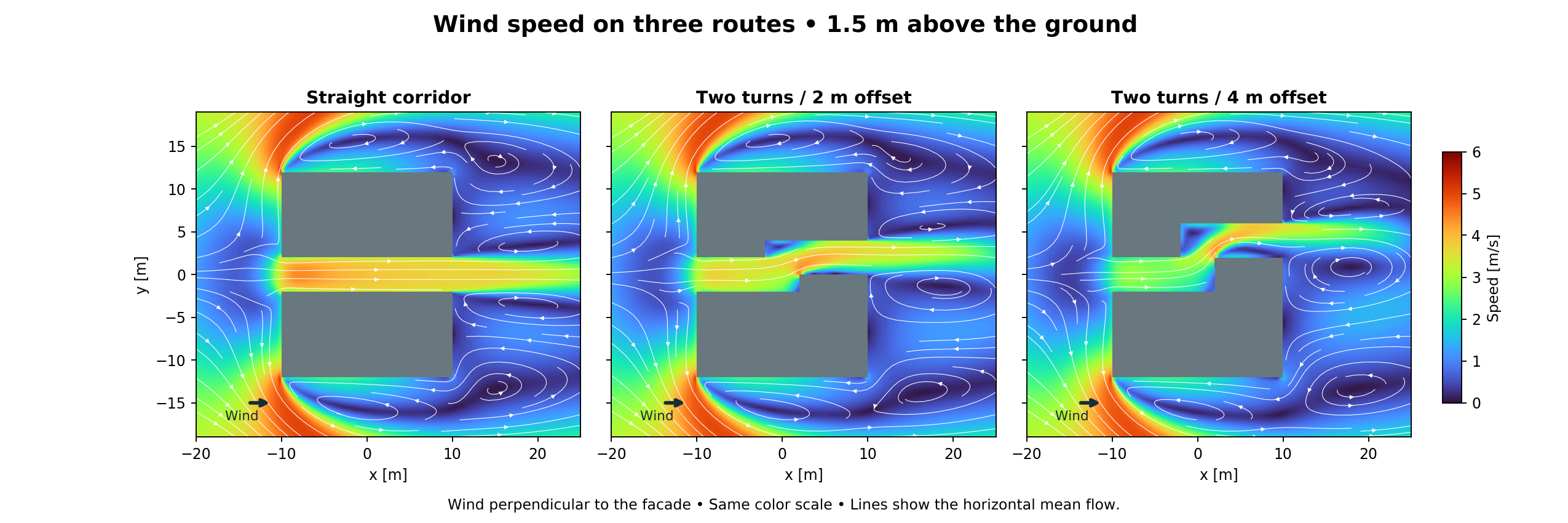
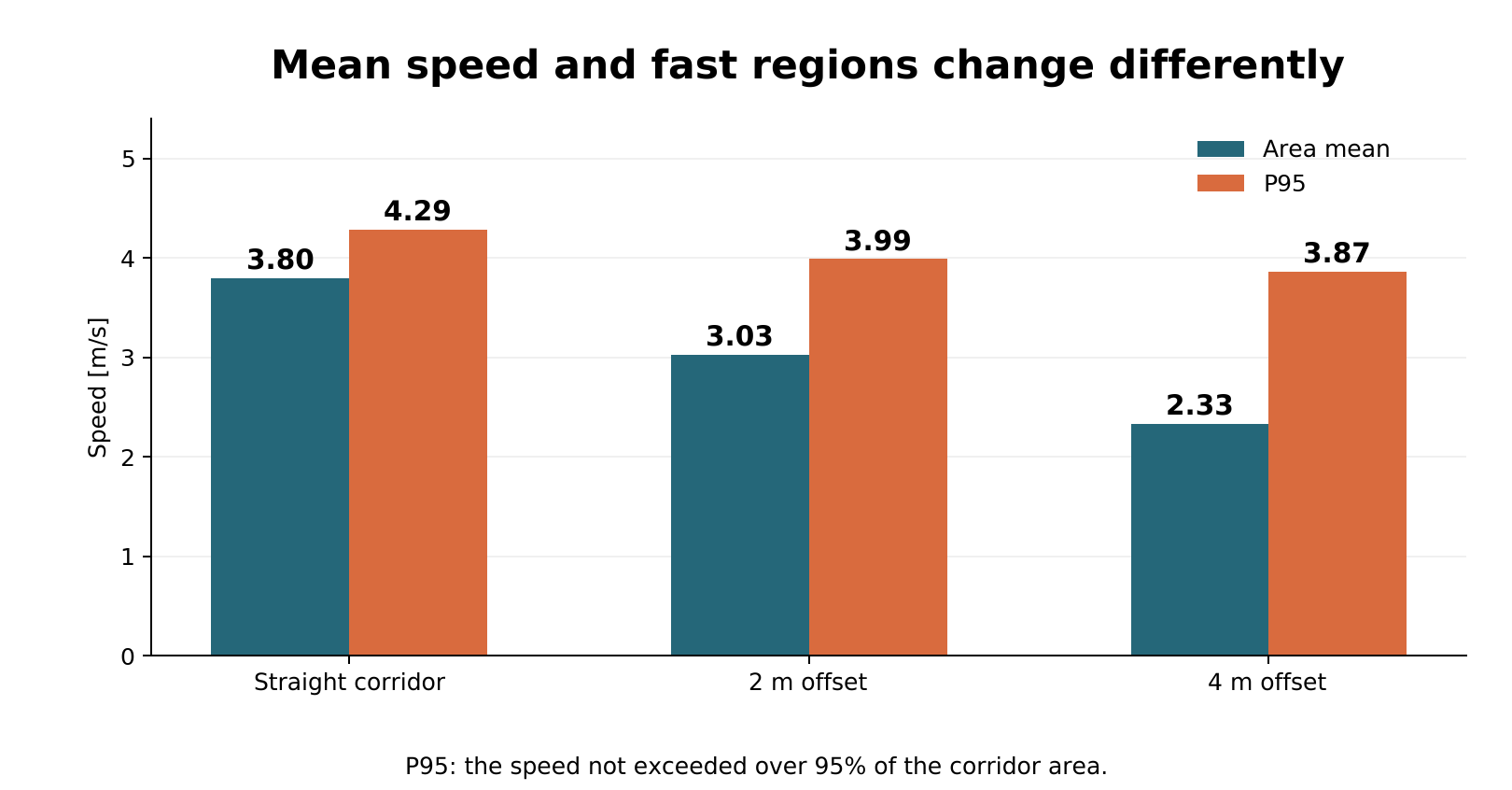
The mean speed of 3.80 m/s in the straight corridor drops to 3.03 m/s in the 2 m offset layout and to 2.33 m/s in the 4 m offset layout. At the largest offset, the reduction is about 39%. Even so, fast regions remain around the turn.
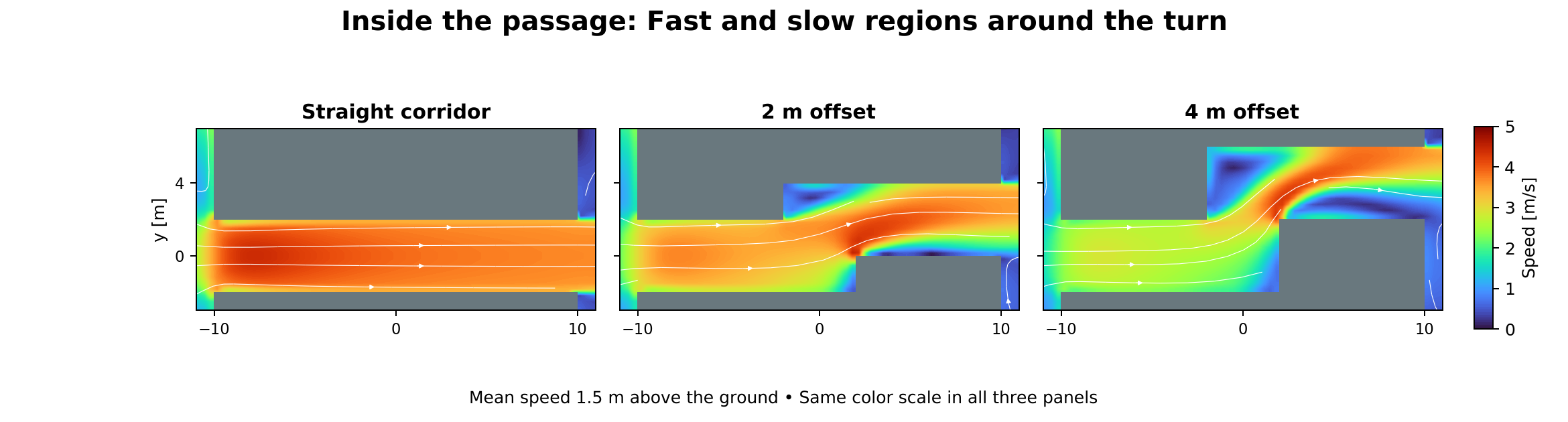
By contrast, the P95 value, which summarizes the distribution of fast regions, drops from 4.29 m/s to 3.87 m/s between the straight corridor and the 4 m offset passage: about a 10% reduction. The drop in the overall mean is not seen at the same rate in the fast regions.
Let’s follow the flow
What should the design focus on?
In this comparison, routes with turns reduce the overall speed level. When planning pedestrian use, however, the entrance, the area around the turn and the exit need to be assessed separately. In particular, the locations of doors and of waiting and seating points should be chosen by looking at where the high speeds concentrate.
The comparison was made for a representative building and a single wind direction, with a reference speed of 5 m/s at a height of 10 m. In a real project, pedestrian comfort is assessed taking into account the surrounding buildings and local wind statistics.
Methodology details and the validation chain belong to Alkazar. Related services: Pedestrian Level Wind Comfort · Structure Wind Consultancy