The Rising Cost of Connectivity: Why the Future of Data Centers Must Be Smarter
The digital economy is exploding — and so is its carbon footprint.
Since 2010, global internet traffic has grown by over 1200%, doubling every couple of years. As of 2024, it has surpassed 350 exabytes per month and is projected to cross 600 exabytes/month by 2027. Most of this traffic — streaming videos, AI computations, cloud services, edge analytics — flows through data centers.
Yet, as essential as they are, data centers are becoming one of the largest and fastest-growing consumers of electricity in the modern economy.
How Big Is the Energy Demand?
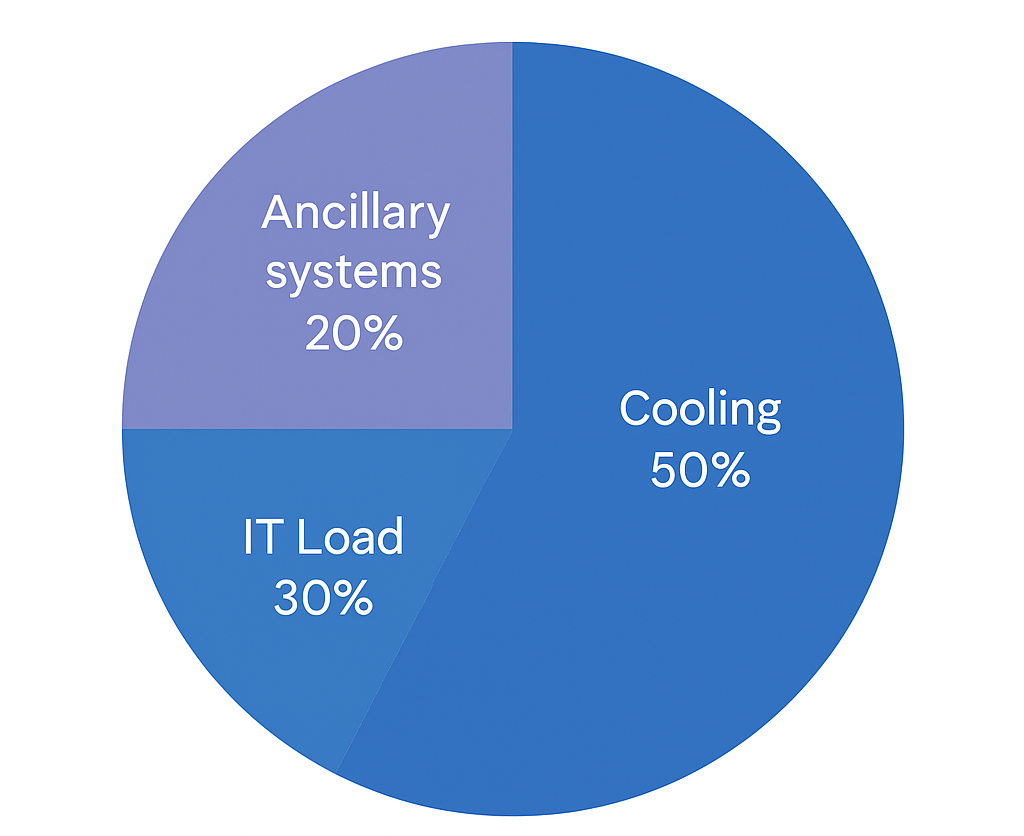
The International Energy Agency estimated in its landmark 2019 report that global data centers consumed 200 TWh of electricity, accounting for 0.8% of total global electricity use. Today, that figure is likely closer to 400 TWh — and rising. One of the biggest culprits? Cooling systems — they can account for more than 50% of a facility’s total energy consumption.
And we haven’t even seen the full weight of AI yet.
The Heat Behind AI Infrastructure
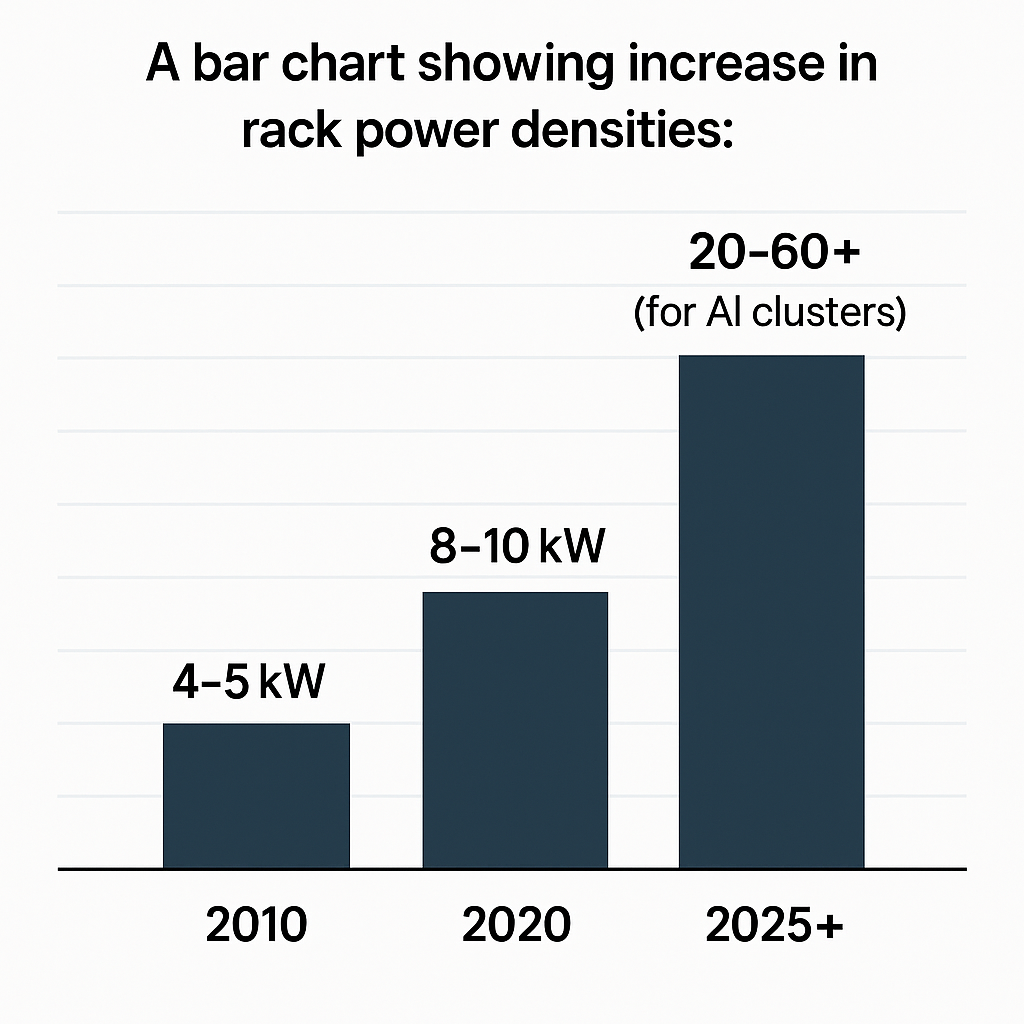
The demand for AI-ready infrastructure, from generative models to high-density GPU clusters, is pushing power and thermal requirements to new extremes. In the US, projects like OpenAI’s $500B “Stargate” initiative are setting the tone for hyperscale growth. This means denser racks, higher heat loads, and the urgent need for smarter thermal strategies.
Climate Change and the Fragility of the Grid
While demand for digital infrastructure soars, climate change is destabilizing the very grids and cooling ecosystems these centers rely on. Heatwaves, droughts, wildfires, and grid instabilities are not hypothetical — they are happening now. In India, renewable-integrated data parks are being developed to meet cooling demands. In Singapore, where land and power are limited, the government has launched a Green Data Centre Roadmap with cooling efficiency thresholds and energy reuse targets.
Engineering the Smart, Resilient Data Center
At Alkazar, we believe that the intersection of climate science and data center design is no longer optional — it’s mission-critical.
We specialize in Computational Fluid Dynamics (CFD) simulations that optimize airflow, predict hot spots, and enhance cooling strategies. Our engineering teams help data center investors and managers answer questions like:
- Is the cold air reaching the racks effectively?
- Is there hot air recirculation or cold air bypass?
- Can the backup cooling systems maintain distribution during failure?
We simulate airflow and thermal dynamics using real-world mechanical setups and architectural models, in line with standards such as ASHRAE 90.4. The result? Quantifiable energy savings, enhanced thermal resilience, and long-term operational optimization.
Why This Matters for Investors
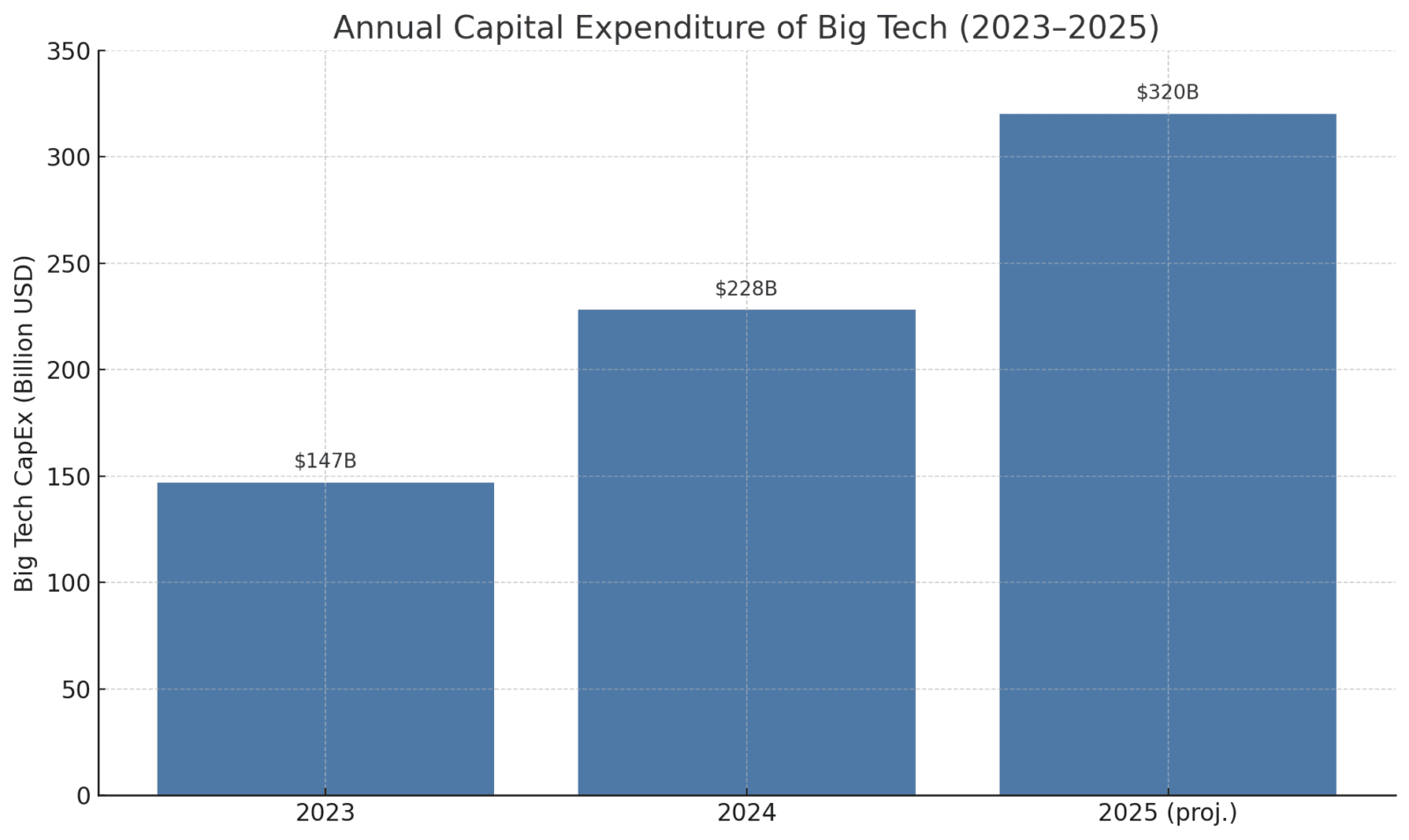
The capital flowing into the data center sector is staggering. In 2024 alone:
- $42.5 billion in M&A activity
- $228 billion in Big Tech CapEx
- Prime market yields compressed to 4.5–5.5% in hubs like Frankfurt and Singapore
What used to be a niche real estate asset is now a strategic priority for sovereign wealth funds, REITs, and infrastructure investors. In this high-stakes landscape, every kilowatt counts — not just for the environment, but for your balance sheet.
From Engineering to ESG
Alkazar’s approach aligns technical precision with sustainability strategy. By reducing energy loss from inefficient cooling systems, we help our partners:
- Lower PUE (Power Usage Effectiveness) scores
- Meet ESG reporting requirements
- Build resilience to climate extremes
- Maximize ROI through operational efficiency
In Summary: Adapt or Overheat
The explosion of data is inevitable. The burden it places on infrastructure and the climate is not. Efficient airflow and thermal design are not just about good engineering — they’re central to risk mitigation, ESG alignment, and competitive advantage.