How much can the air stream we feel above our heads when entering a store change the air passing through the open door? We compared the same store in a computer model with the air curtain off and at three different blowing flow rates.
Same door, four different cases
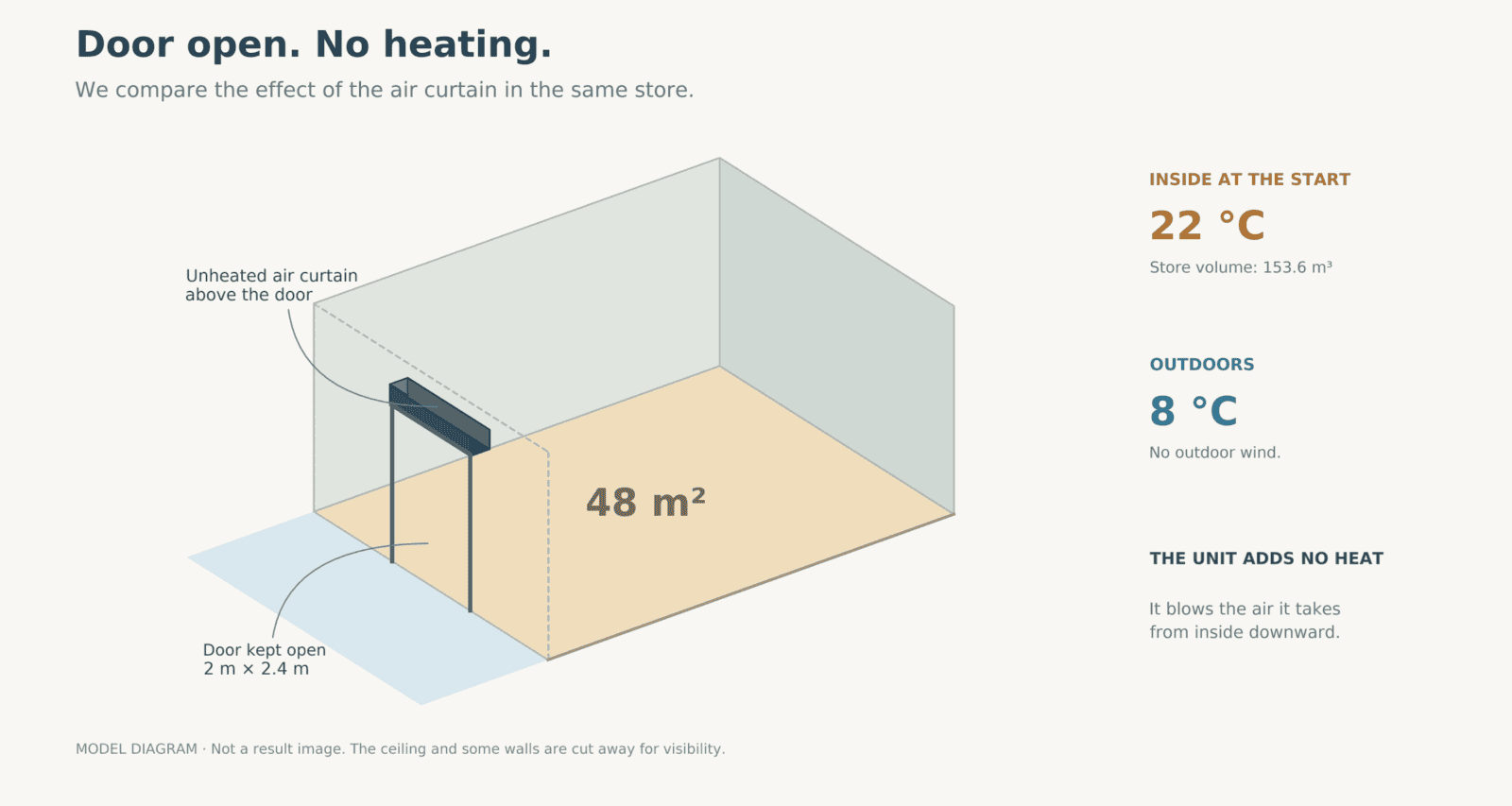
In the example store, it is 22°C inside and 8°C outside at the start. We compare the air curtain above the open door when off and at low, normal and high flow rates.
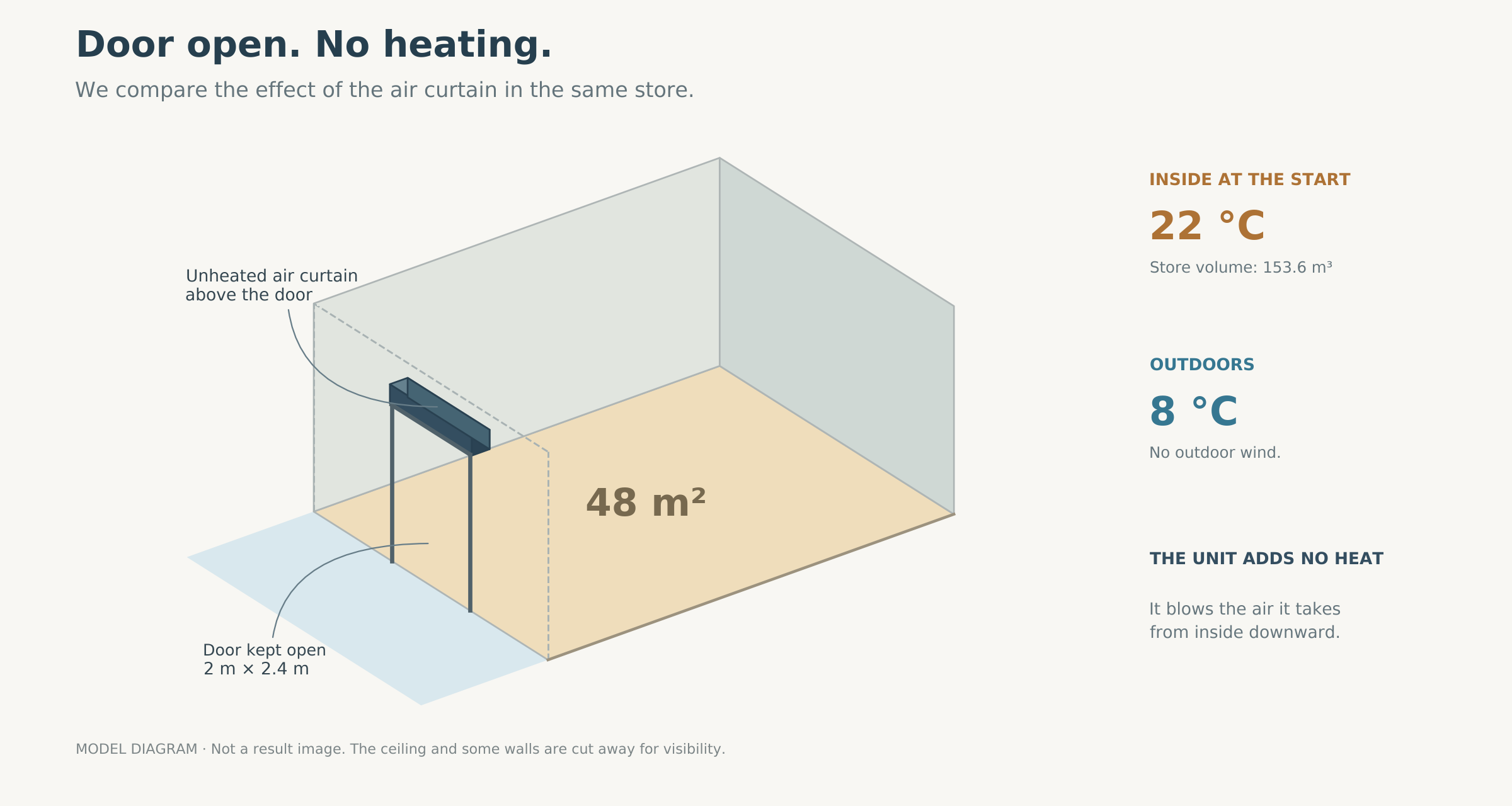
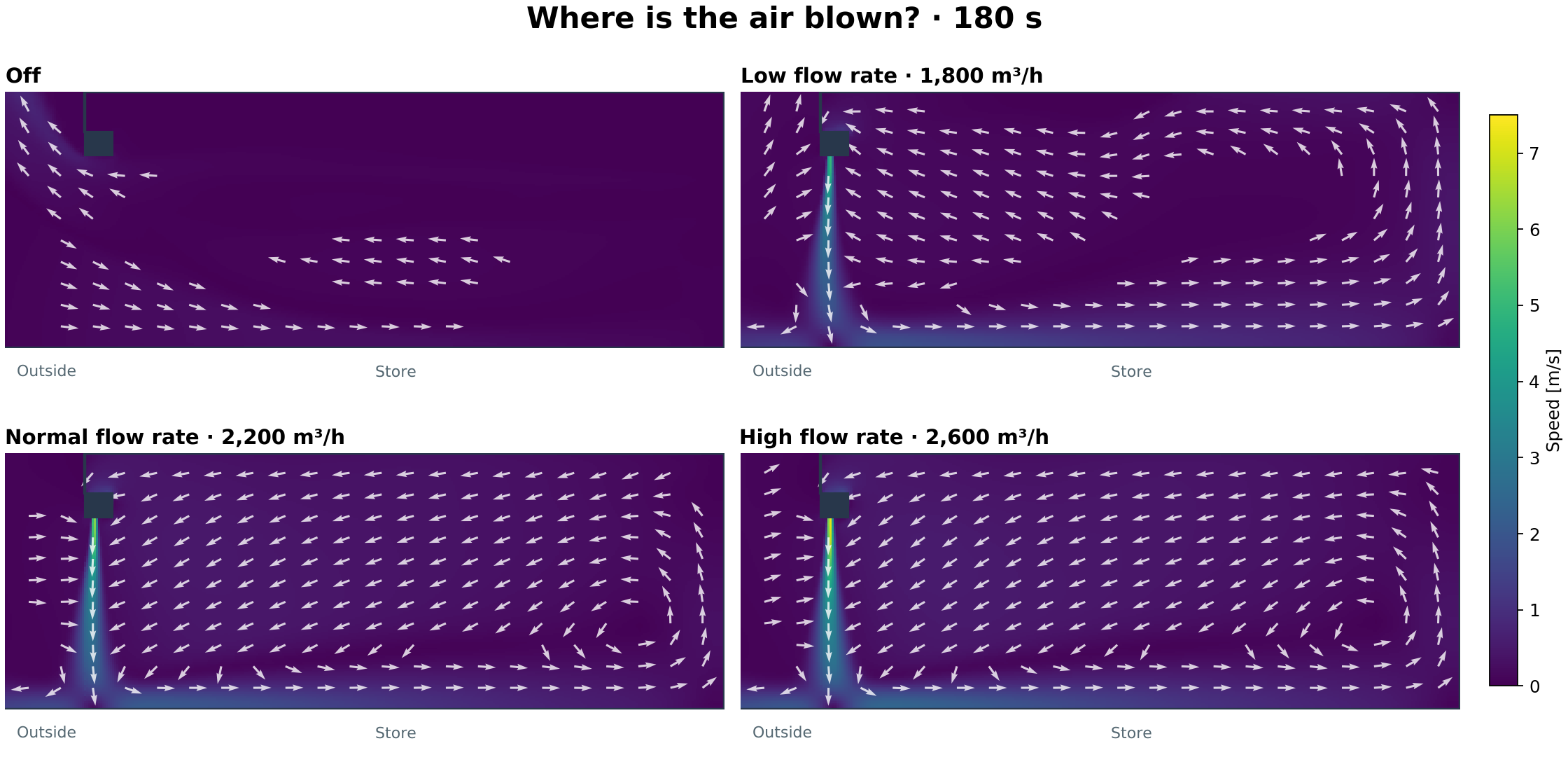
The air curtain does not heat; it takes air from inside and blows it down across the doorway. In this way, it changes the air movement at the door without raising the temperature.
How much did the interior cool down?
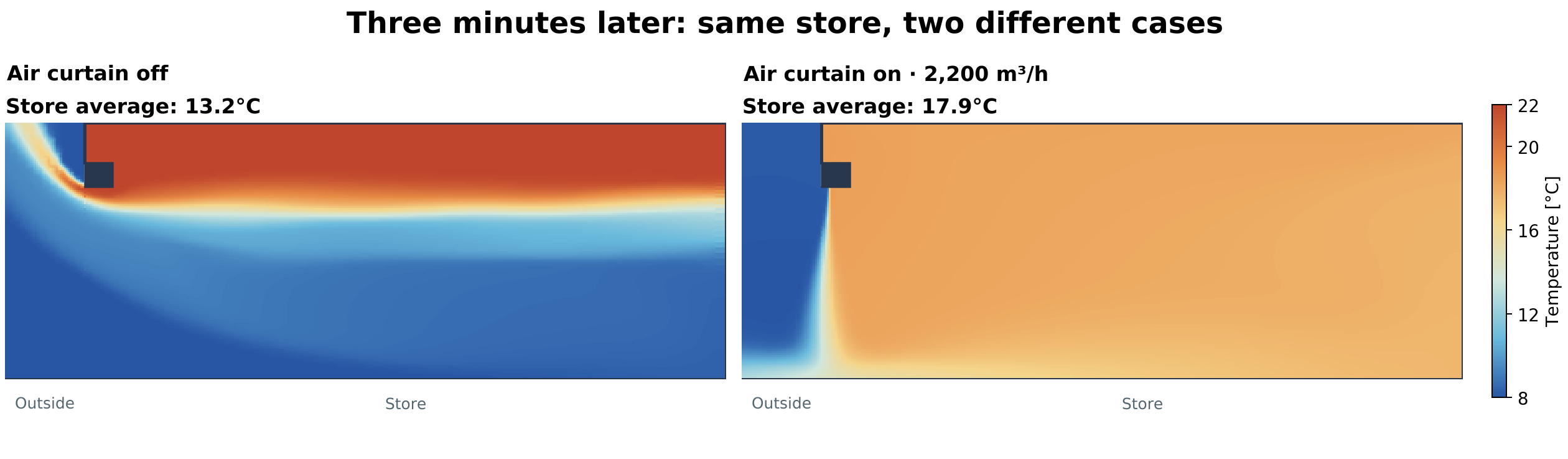
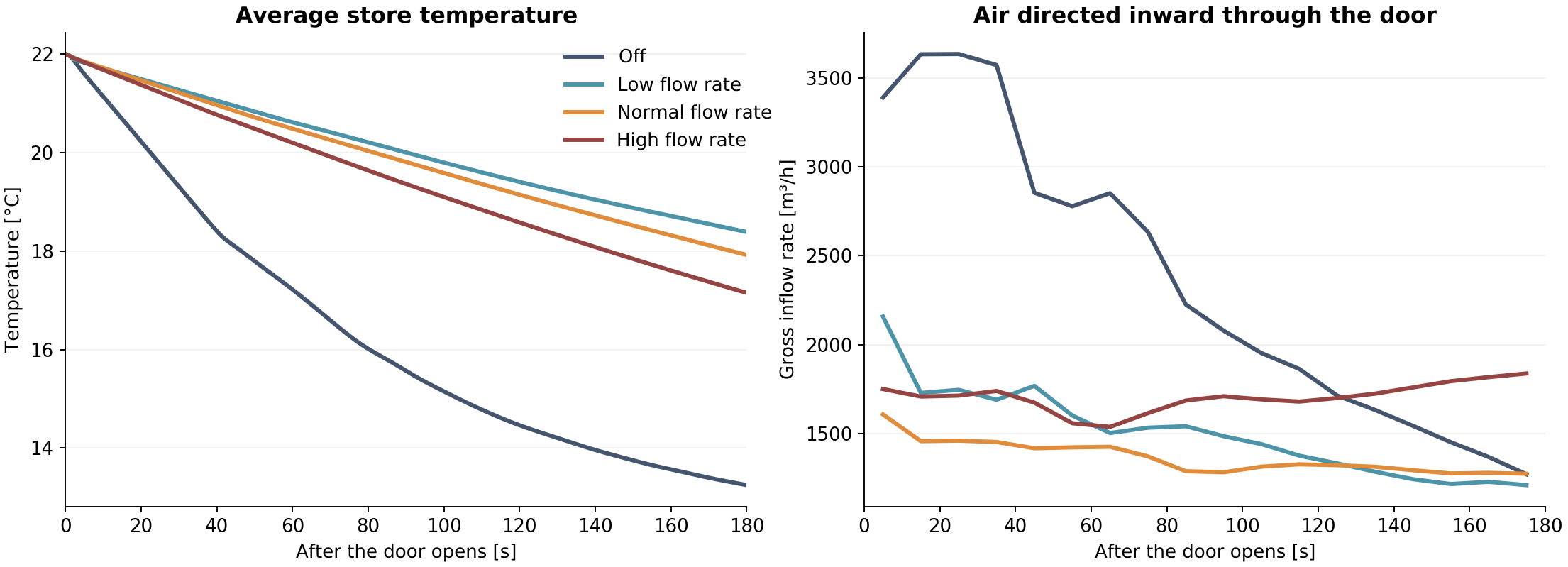
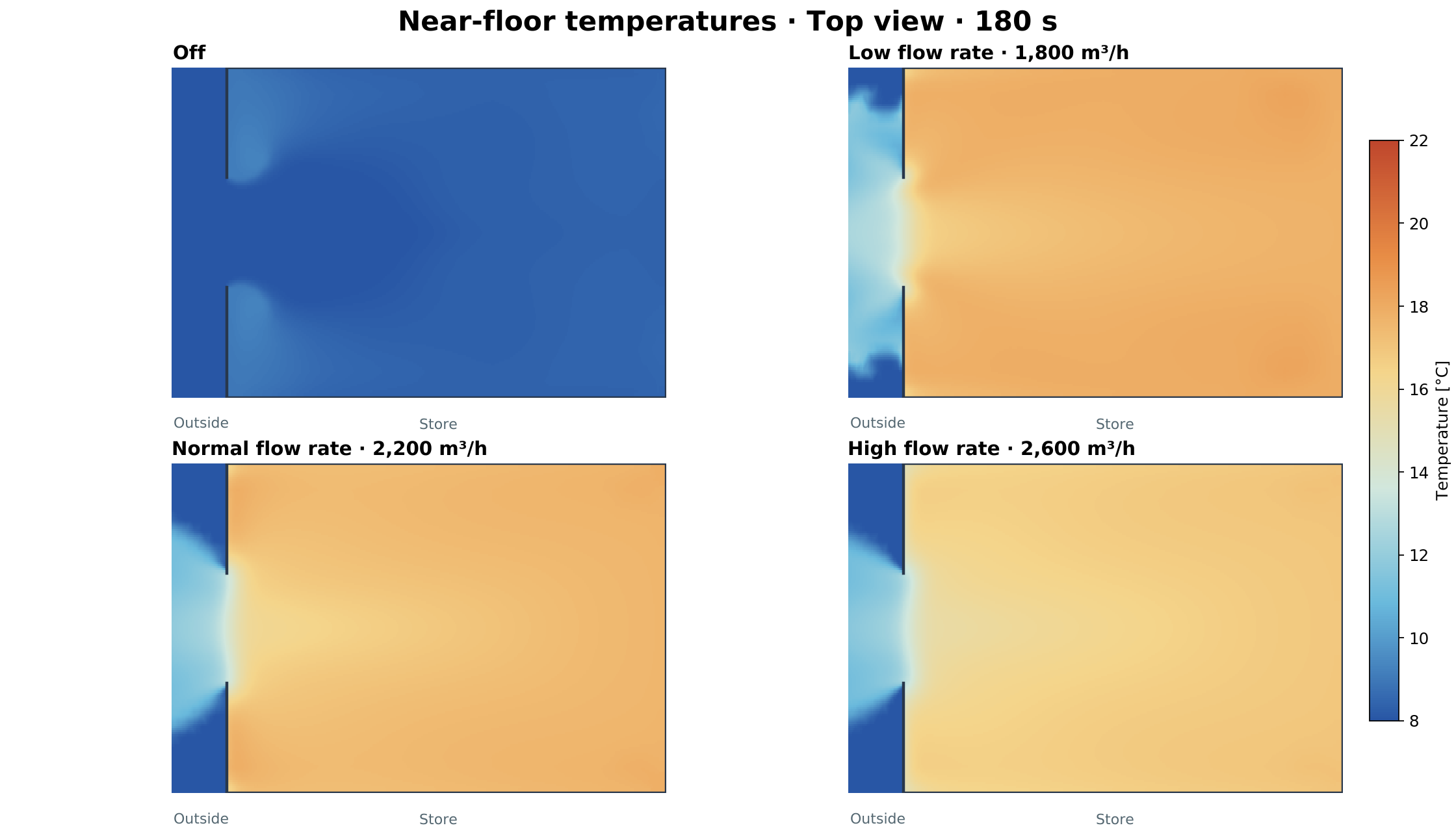
After three minutes, the average temperature of the store was 13.2°C with the unit off and 17.9°C at the normal flow rate. In this example, the air curtain running at the normal flow rate slowed the cooling of the store.
With the unit off, warm air stays at the top while the cold region spreads out from floor level. In this section view, temperatures at the normal flow rate are closer to each other.
Is stronger blowing always better?
In this example, the high flow rate did not give a higher average temperature than the normal flow rate. Stronger blowing can also change how indoor and outdoor air mix. The final averages at low, normal and high flow rates were 18.4°C, 17.9°C and 17.2°C respectively.
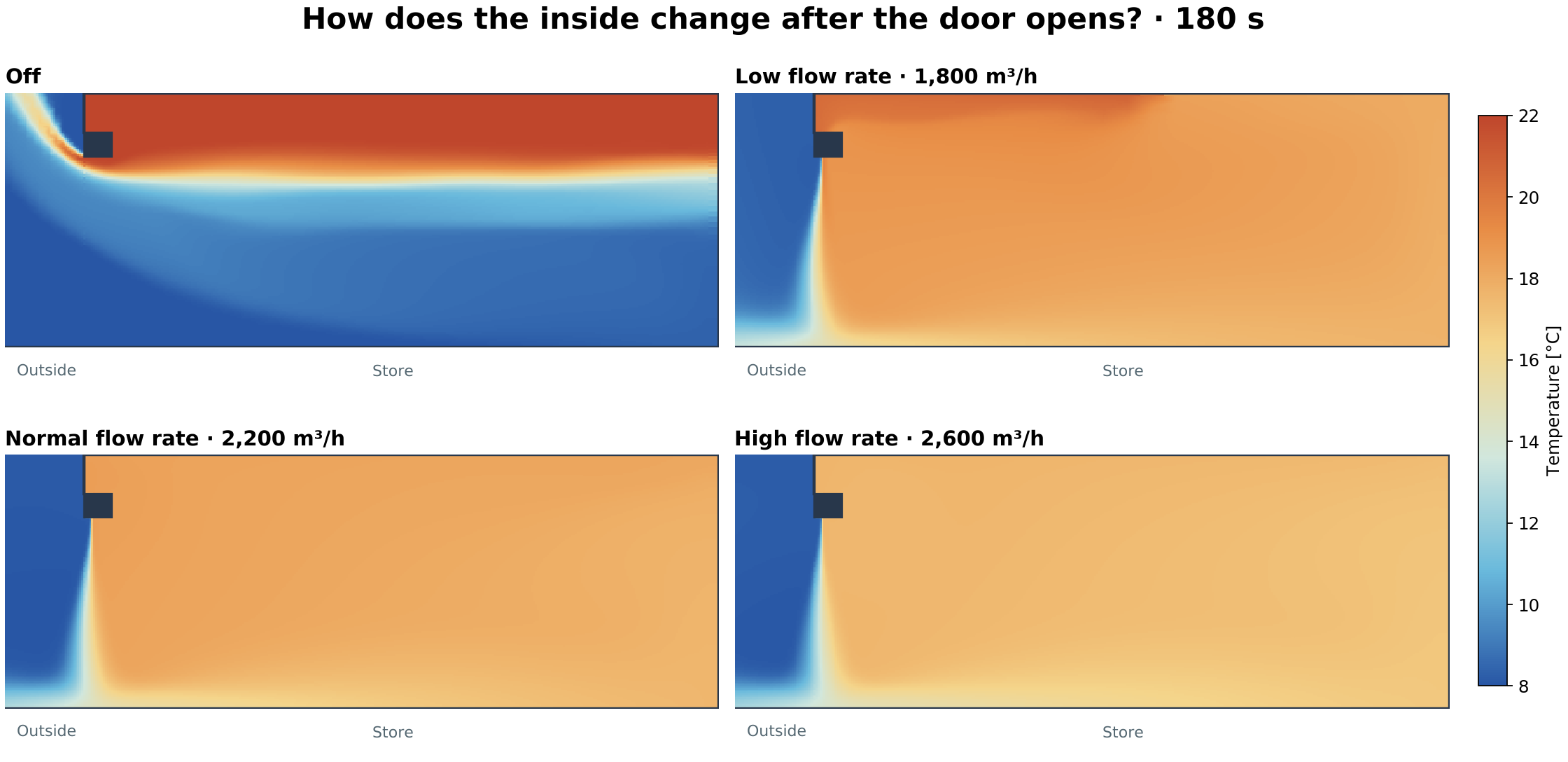
The average temperature does not mean the temperature is the same everywhere in the store. The near-floor view shows how cold air spreads inward from the entrance.
Is the air curtain enough on its own?
In this example, the air curtain slows the cooling, but the interior still cools down. Stronger blowing alone does not give a better result either. Choosing a unit that suits the door and directing the air to the right place are as decisive as blowing power.
The results cover the first three minutes in this example store; if the air movement at and around the door changes, the results may change too.
Methodology details and the validation chain belong to Alkazar. Related services: Indoor Simulations · Indoor Thermal Comfort