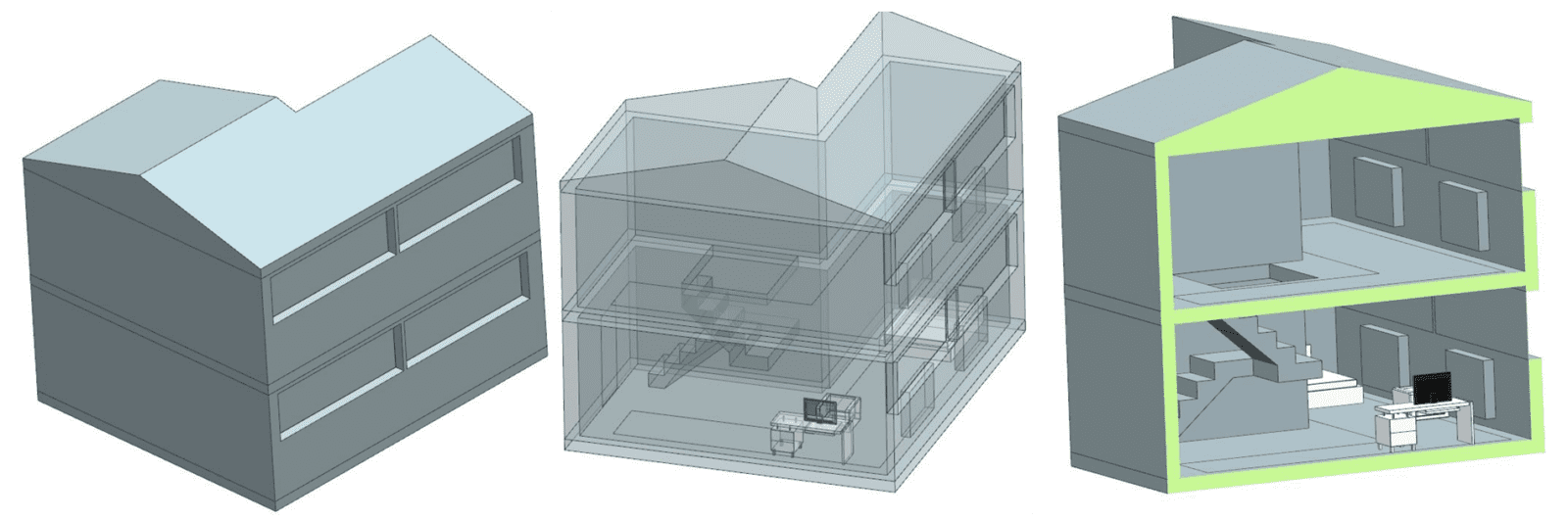
In this study, the effects of radiator heating and underfloor heating systems on indoor temperature distribution, heating rate, and thermal stratification were investigated using CFD for a two-story small detached house model.
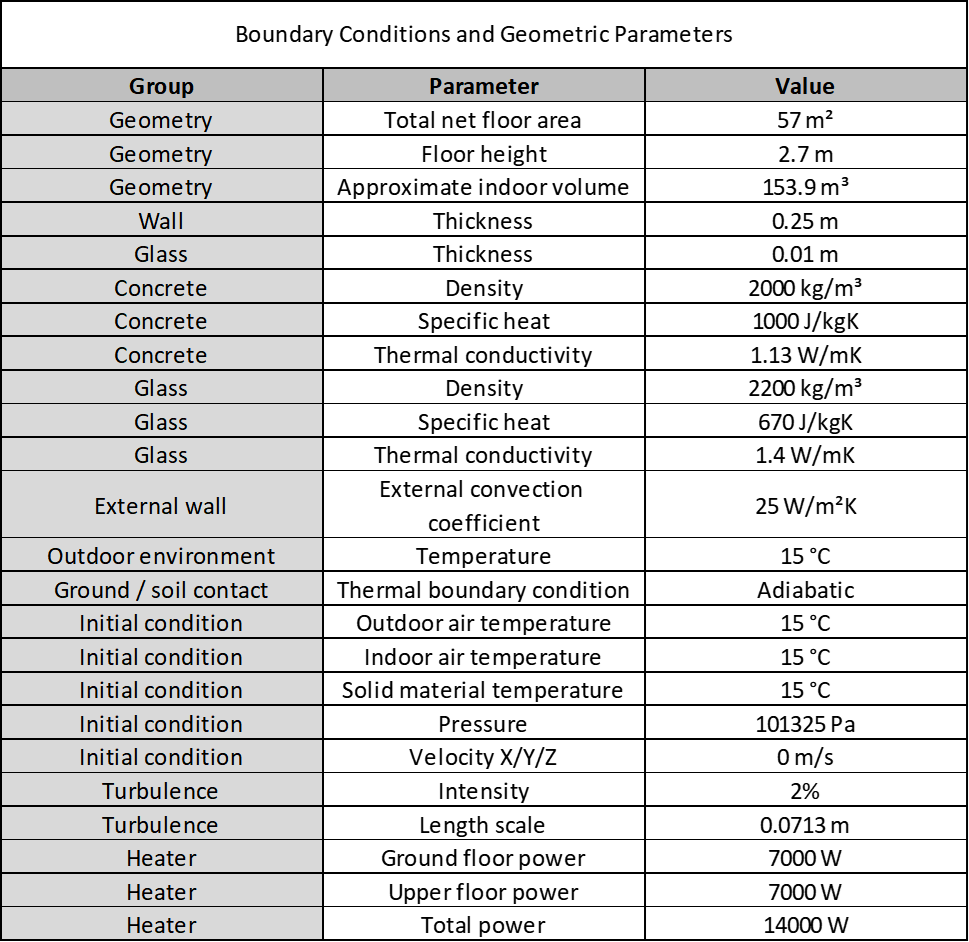
The external surfaces of the building were assumed to be directly exposed to the outdoor environment. The effect of outdoor air temperature on the building materials and the heat losses from the external surfaces were included in the analysis. As an initial condition, the indoor air, outdoor air, and all solid structural elements were defined at 15 °C, ensuring that the heating process started from the coldest initial condition of the building.
With this approach, not only the indoor air but also the thermal inertia of the walls, glass, and other structural elements was taken into account.
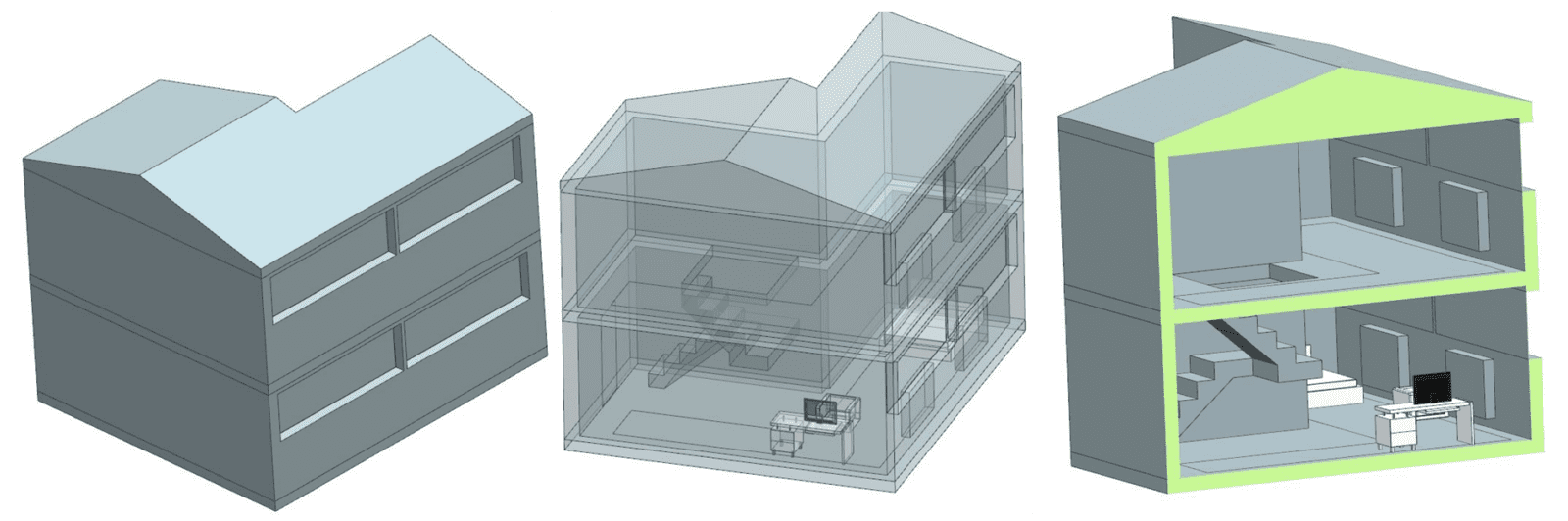
In the model, a heat input of 7000 W was applied separately to the ground floor and the upper floor, resulting in a total heating power of 14000 W. A convection coefficient of 25 W/m²K was used on the external surfaces to account for convective heat losses to the outdoor environment. Since the floor surface is in contact with the soil and the soil domain was not modeled separately, the ground boundary condition was assumed to be adiabatic for the comparative analyses.
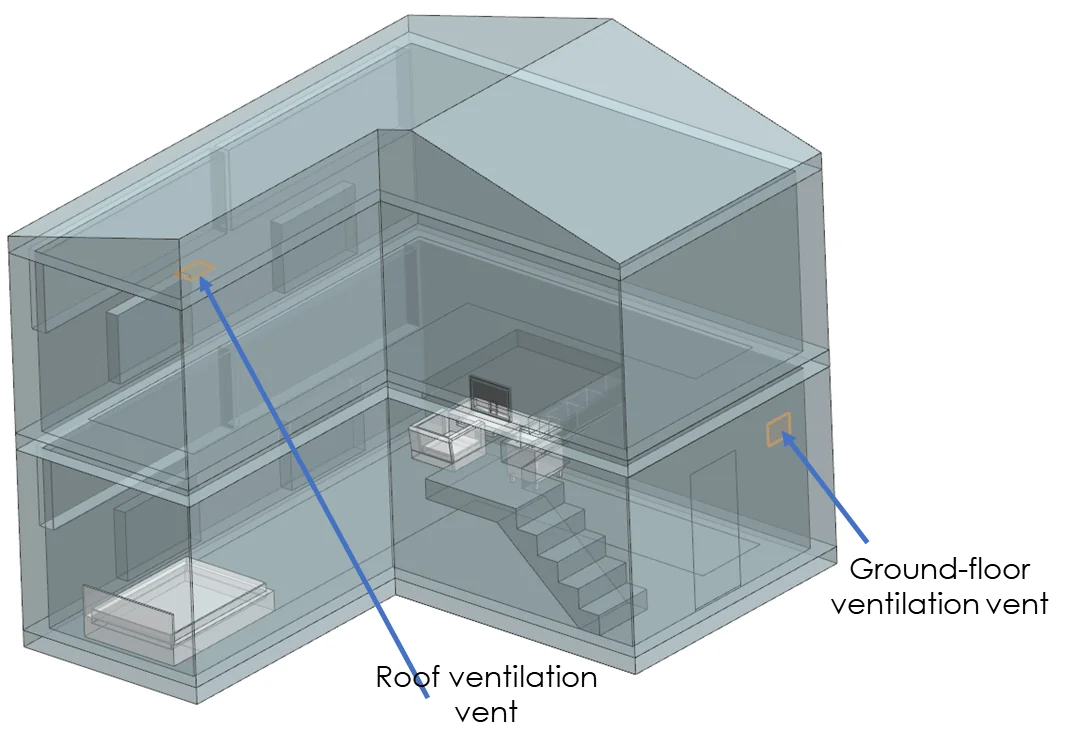
The model also includes ventilation vents located at the entrance area and on the upper floor. Therefore, natural convection, inter-floor warm air movement, the staircase effect, and ventilation-related heat losses were also included in the evaluation.
Four different heating scenarios were investigated in the analyses:
Scenario 1: Ground floor underfloor heating, upper floor radiator heating
A more homogeneous heat distribution is expected on the ground floor due to heat spreading over a large surface area, while more pronounced warm air rising and thermal stratification are expected on the upper floor due to the radiator effect.
Scenario 2: Ground floor underfloor heating, upper floor underfloor heating
Since heat is supplied through large floor surfaces on both floors, a more balanced temperature distribution is expected. However, due to the thermal inertia of the floor and structural mass, the initial heating process may occur more slowly.
Scenario 3: Ground floor radiator heating, upper floor underfloor heating
Strong natural convection and faster air heating are expected on the ground floor due to the radiator, while a more balanced temperature distribution is expected on the upper floor due to underfloor heating. This scenario is especially important for examining the effect of warm air transfer from the lower floor to the upper floor.
Scenario 4: Ground floor radiator heating, upper floor radiator heating
Warm air currents rising from the radiators become more pronounced on both floors. In this scenario, the indoor air temperature is expected to increase more rapidly; however, warm air accumulation near the ceiling and vertical thermal stratification may be observed more strongly.
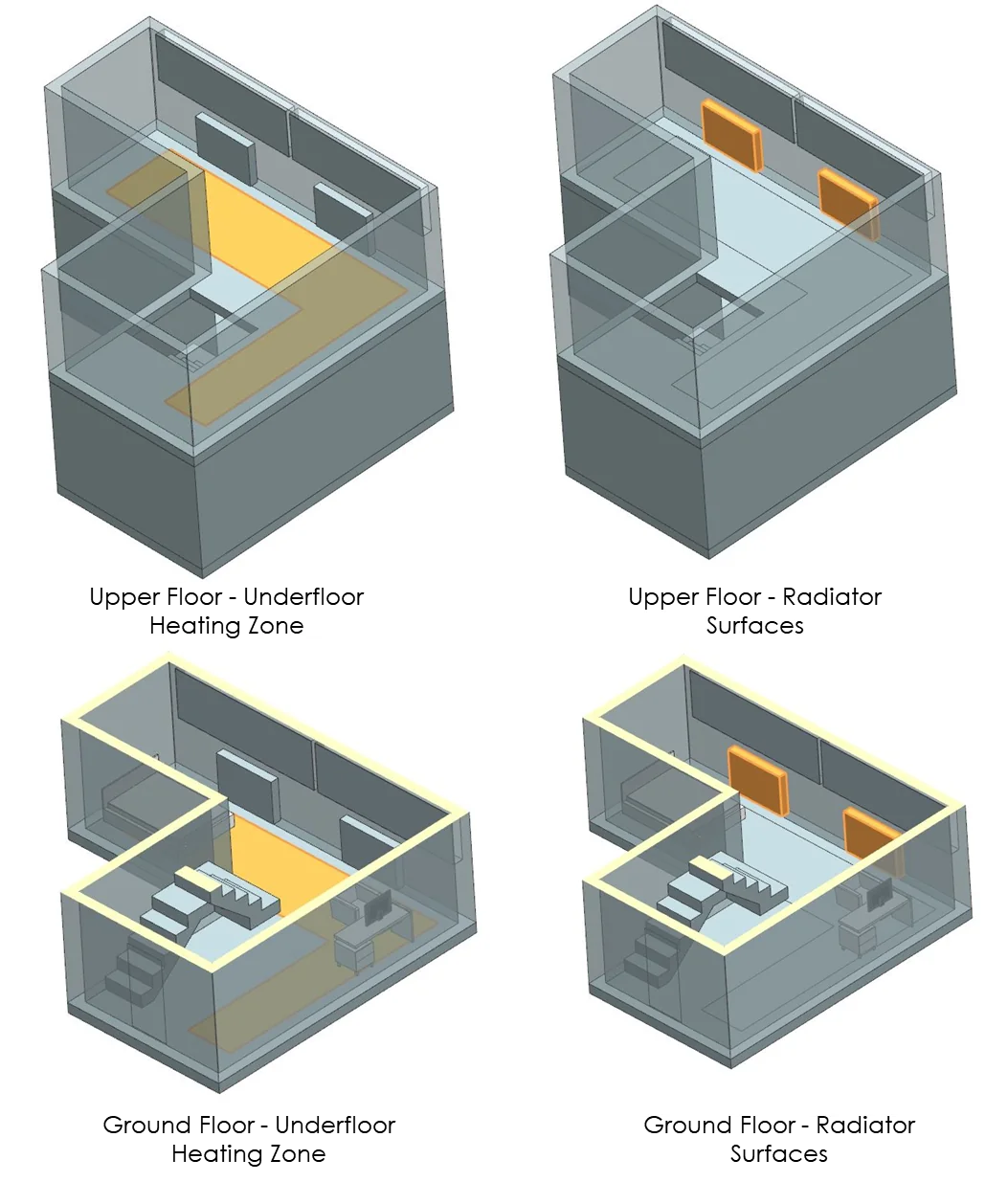
To view the analysis video recorded simultaneously for each scenario:
Conclusion: At the end of the analysis, the main difference between the systems was not the heating power itself, but the way heat was delivered into the indoor volume.
The results show that the heating system type has a significant effect on temperature distribution inside the volume. In scenarios with radiator heating, the indoor air temperature increased more rapidly; however, warm air rising from the radiators tended to move toward the upper zones and ceiling regions. This caused a temperature difference between the occupied zone and the ceiling level.
In scenarios with underfloor heating, heat was transferred to the space over a larger surface area and at lower air velocities, resulting in a more homogeneous temperature distribution. However, because the structural elements were initially cold and had thermal inertia, the increase in indoor air temperature was slower. Therefore, the study evaluated not only the average temperature, but also the vertical temperature profile, inter-floor warm air movement, temperature uniformity in the occupied zone, and the initial warm-up behavior of the heating systems.